

Introduction
Monaural broadcasting, while not a widespread practice, is used by some FM stations located in cities with high congestion and limited control/regulation of the electromagnetic spectrum. When the broadcast content is primarily spoken word (magazines, news, sports, journalistic programs), stereo transmission offers no significant advantages, as its benefit is mainly limited to music.Technical advantages of mono mode
- Improves station coverage range.
- Significantly reduces interference.
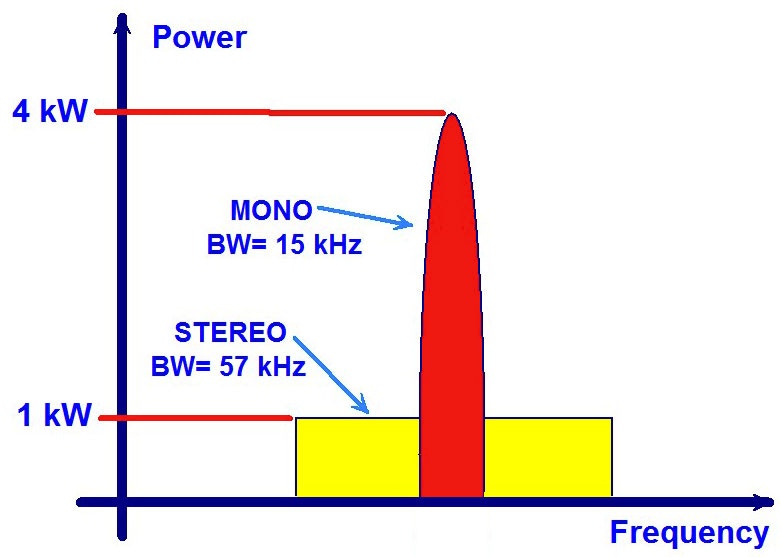
- The energy that in stereo is dispersed across a wider bandwidth is concentrated in just one quarter of the bandwidth in mono.
- This increases effective on-air power by up to 4 times (NAB Engineering Handbook).
- Improves coverage by reducing:
- Interference from nearby stations.
- Multipath distortion in urban areas.
Strategic use of mono mode
Mono transmission can be used in a programmed way to:- Improve reception and coverage during talk show programs.
- Compete for audience in time slots where intelligibility is more critical than musicality.
- Alternate between mono and stereo based on broadcast content or schedule.
Ways to switch to mono
- By preset:
Each preset can include an attribute that activates MONO mode when selected.
The processor will remain in MONO until modified by a new preset. - Microphones on-air (GPI):
Using the GPI input, switch to a VOICE preset with MONO mode activated.
(See GPIO section for more details). - Manual control:
Through the Lite Commander control application. - Automatic scheduling:
Through programming in Lite Commander.